Article
Lamp colour temperature guide: warm or cool light at home
Understand lamp colour temperature in Kelvin, choose a useful starting range for each room and compare warmth and brightness after sunset at home.
If your living room feels harsh at night, lamp colour temperature may be part of the reason. It describes whether white light looks warm and amber or cooler and bluer. Try warm light around 2700–3000 K in living rooms and bedrooms, or neutral light around 3500–4000 K in a kitchen or work area. These are rules of thumb; brightness and placement matter too.
In short: Start with warm light for rooms where you rest and neutral light for places where you need to see detail. Compare both at the same brightness after sunset. Check how the lamps light the task, as well as how the whole room feels, before buying a full set.
Compare lamps after sunset, when daylight is no longer changing the result. Look at the room as a whole and at the tasks within it. One bulb label cannot tell you whether a sofa corner is pleasant to read in or whether the kitchen worktop is properly lit.
Lamp colour temperature in plain English
Colour temperature is measured in kelvins, written K. A lower K value looks warmer, with more amber in the white light. A higher value looks cooler. It describes the *appearance* of the light, not how hot a bulb becomes. It is also separate from brightness.
That distinction matters when you compare rooms. A cool lamp at low brightness may feel subdued; a very bright warm lamp can still feel harsh. Consider both settings and the position of the lamp. Light aimed at a worktop has a different job from light that fills a living room.
There is no single correct temperature for a home. A person who wants a calm bedroom may prefer warm light throughout. Someone who uses a room for detailed work may want a more neutral task lamp there while keeping the rest of the room warmer. Try the effect in the room instead of choosing from a number alone.
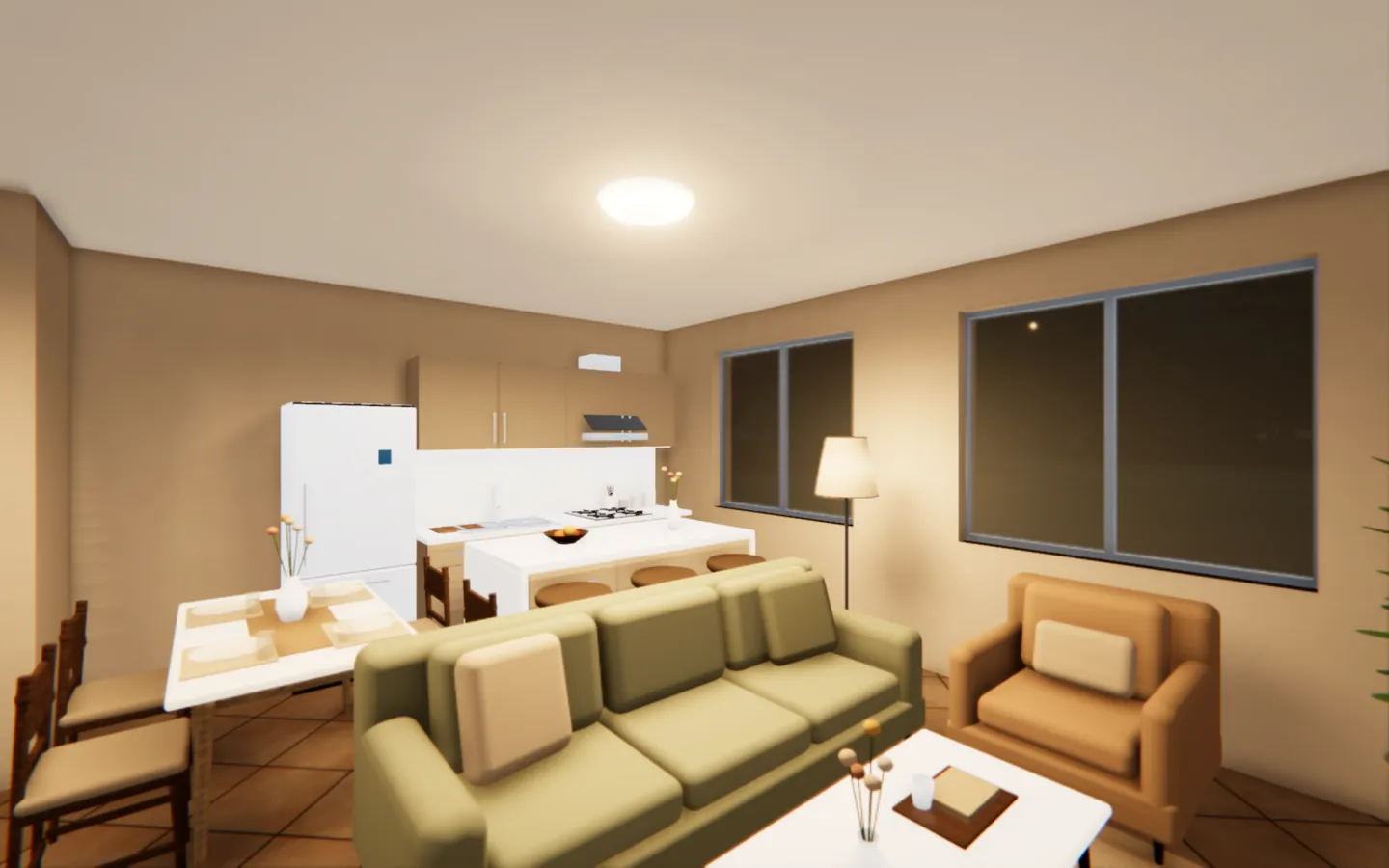
Warm light for living and sleeping spaces
Warm light around 2700–3000 K is a useful first trial in a living room. It can make an evening seating area feel relaxed. Before buying every bulb in that range, check whether you also read, work or prepare food in the same space. A separate task lamp may be more useful than making all the ceiling lights brighter.
In a bedroom, gentle warm light can make the transition to evening feel calmer. Put light where you need it: near a wardrobe, bedside table or dressing area. A dim corner around storage can be frustrating even when the room's overall atmosphere is pleasant. The aim is to see what you are doing without lighting the whole room more than you want.
If a living room and kitchen share one open space, their lamps do not have to behave identically. You may want warm ambient light by the sofa and clearer task lighting over a preparation area. Consider how the zones look together when both are on; a very abrupt mix may distract from the room.
Neutral light for kitchens and work areas
Neutral light around 3500–4000 K is a common starting point for a kitchen or desk. It can help a work surface look clear without making every room feel cool. Position and coverage still matter more than the number by itself. If your body shadows the counter, changing colour temperature will not fix the missing task light.
At a desk, avoid a lamp reflecting into the screen or shining straight into your eyes. Test the setup at your normal working hour. Daylight from a nearby window may make the same electric lamp feel different at noon and after dark. Think about where the light falls on paper, keyboard and screen.
Try neutral light where you need to see detail and warmer light where you rest. These are choices, not rules about room names. A kitchen used mostly for relaxed evening meals may call for a different balance from one used for detailed food preparation.
Adjust brightness before deciding the colour is wrong
If the room still feels wrong, check in this order:
- Sit where you normally read, cook or work and notice any dark patch or glare.
- Adjust brightness before changing the colour temperature.
- Move or add task light where a ceiling lamp misses the work surface.
- Compare related lamps together within one area of the room.
- Test the combined setting after sunset with your usual furniture and curtains.
If a room feels stark, the cause may be too much light or poor placement rather than a colour temperature that is too cool. Dim the light and compare again. If a room feels gloomy, first check whether the places you use are actually lit. One bright ceiling lamp cannot always replace several well-placed sources.
Mixing warmth works best when each light has a purpose. Keep related lamps reasonably consistent within one zone, then use a task light where a different quality helps. Check the combined effect with all the lamps you would normally switch on. A single sample bulb viewed alone may mislead you.
Make the comparison with the same furniture and curtains in place. Dark upholstery and deep-coloured walls can absorb light, while pale surfaces may reflect more into the room. If the room feels dim, ask whether the issue is the lamp's position, its brightness or the surrounding surfaces before changing its colour temperature.
If several people share the room, ask them to compare the settings while doing their normal activities. Someone reading in a chair may notice a dark patch that is invisible from the doorway. Someone cooking may care more about the worktop than the room's overall glow. Use those observations to place light where it helps.
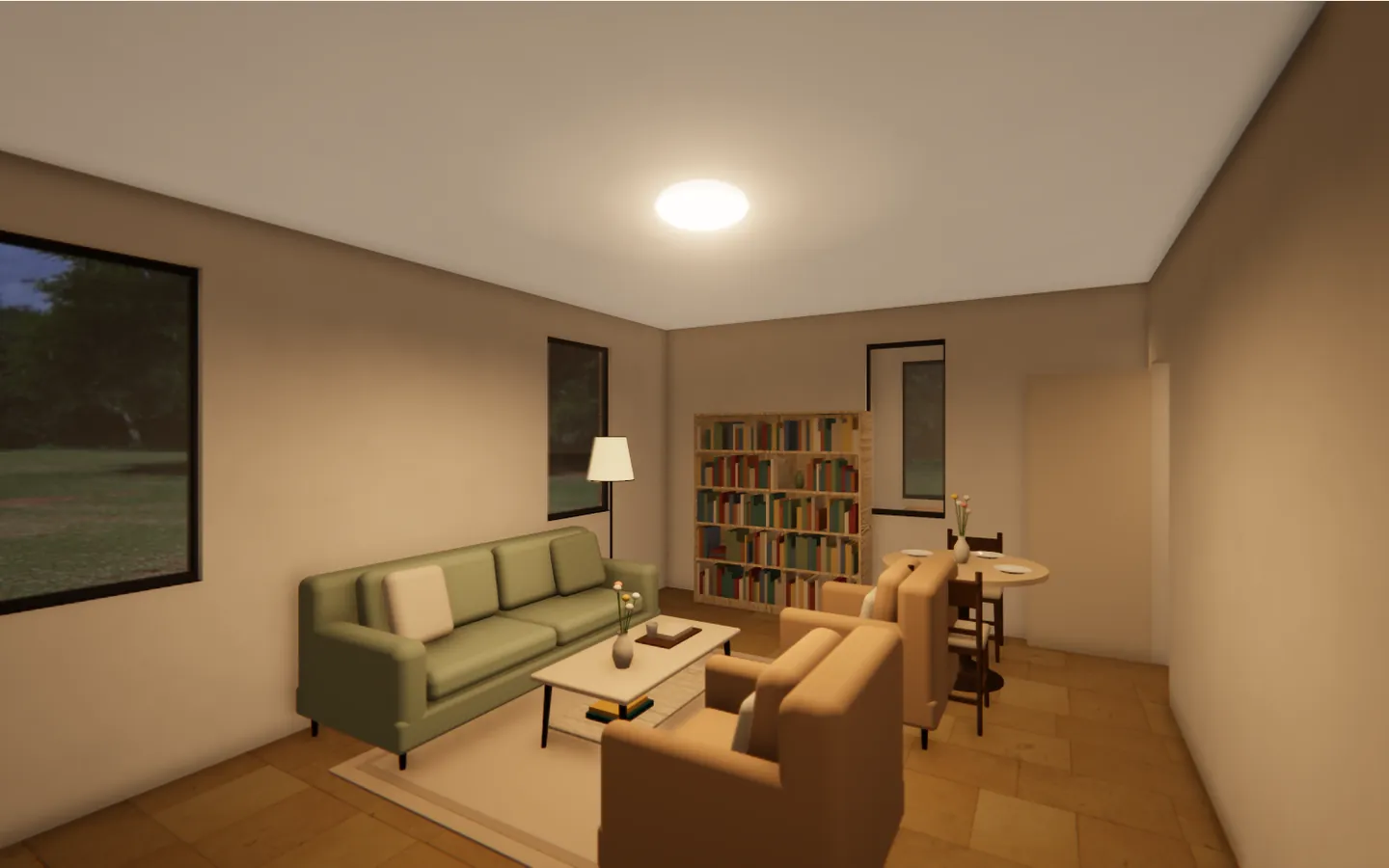
Compare warm and cool lamps after sunset
In Home 3D Studio, Outside sets the evening hour and Rooms adjusts lamp brightness from 0–200% and warmth from 1800–6500 K for each room. Camera and lamps explains the controls. For a desk, see the home office layout guide.
- Open the free two-bedroom apartment sample with no sign-up.
- In Outside, use Sun to set an hour after sunset.
- Use Rooms to keep one room at a similar brightness while changing the lamps from warm to cool.
- Use Walk to view the seating and work areas, then compare the two warmth settings at the same brightness.
Try every tool now on a free sample, with no sign-up.
The model helps you compare moods and positions; the real result will also depend on the bulbs, fittings, surfaces and screen you view it on. Try one bulb or lamp in the actual room before buying a full set.
See it in 3D
Open a sample design and walk through it, check the sun, set the hour and watch the lamps come on. It is free, in your browser, with nothing to install.
Or open a sample directly: 1920s teacher's cottage · Two-bedroom apartment
Start with a warm or neutral range that suits the room's main job, then adjust brightness and placement. Judge the light at the hour you will use it most.