Article
Which direction should a house face for the best sunlight?
Which direction should a house face for sunlight? Compare window orientation, climate and seasons, then check the hours that matter at a real home.
Which direction should a house face if you want more sunlight? Look at the main windows, not the front door. Their direction decides when direct sun can enter the rooms you use most. The best choice depends on where you live, how warm the climate is, and whether you want light at breakfast or later in the day.
In short: In the northern hemisphere, south-facing main windows generally receive the most direct sun; in the southern hemisphere, look towards north. East favours mornings and west favours later light. Match the windows to your daily routine, then check seasonal shade from balconies, trees and neighbouring buildings.
Near the equator, keeping unwanted sun out may matter more than choosing one compass direction. Your climate and the shade around a specific window matter as much as its compass label.
Which direction should a house face for sunlight?
There is no single best direction for every house. If you live in a cooler part of the northern hemisphere and want winter sun in your living space, south-facing windows are a useful starting point. In the southern hemisphere, look towards north instead. In a hot climate, the question may be how to get useful daylight without too much heat and glare.
Consider the windows of each room separately. A front door may face north while the living room opens to the south. Calling that a “north-facing house” would hide the part that matters to your daily life. If you have a floor plan, mark north and then note where the largest windows are.
The window direction is only the start of the answer. A deep balcony, a tree, a neighbouring building or a hill can block light. The season and the hours when you are actually home also change what you experience. A sunny room at a viewing can feel quite different at another time of day.
What each window direction feels like
South-facing windows in the northern hemisphere can bring direct light for much of the day, including when the winter sun is low. That can be welcome in a cool place. In a hot place, you may want shade at the window during warmer months. South-facing windows in the southern hemisphere tend to get less direct sun; north-facing windows take the sunnier role there.
North-facing windows in the northern hemisphere usually offer steadier, indirect light and less direct sun. That may suit a room where you prefer an even light, but it can leave a living space feeling dim if other windows are shaded too. In the southern hemisphere, north-facing windows generally receive more sun.
East-facing windows catch morning sun. They can make a breakfast room or bedroom bright early, then leave it cooler later in the day. If you sleep late, that same early light may be less welcome. Check when the sun actually reaches the window rather than assuming that every east-facing room feels bright all morning.
West-facing windows catch later sun. That can suit a living room used after work, but late summer light can also bring glare and warmth when you want to relax. Think about what you would do with that window at those hours: enjoy the light, draw a blind, or both.
These are starting points, not guarantees. A small window, a shaded outlook and a room with windows on several sides will each change the result. Compare the rooms you would use at the same time of day, not just the compass labels on an estate agent’s plan.
Match the sunlight to each room
Begin with your routine. Someone who leaves early and returns in the evening may care more about late light in the living room than about midday sun there. Someone who works at home may value even light at a desk and want to keep direct glare off a screen.
- Living room and television: West-facing windows can brighten evenings and warm summer afternoons; low sun on a screen can cause reflections at viewing time.
- Kitchen and dining: Check whether low sun crosses the worktop or dinner table, and whether large glass adds summer heat.
- Bedroom: East-facing light may suit an early riser; a late sleeper may need blackout curtains. In the northern hemisphere, a north-facing room usually stays darker.
- Work corner: Steady side light is easier on the eyes than sun on the monitor or in your face.
- Floors and fabrics: Strong direct sun can fade rugs, flooring and upholstery over time.
Do the same check for any room that matters especially to you. A window direction that suits one person’s schedule can frustrate another’s. The useful question is: will this room have the light I want when I use it?
Why winter, summer and climate change the answer
In winter, the sun sits lower in the sky. Light can reach further into a room through a window that faces it. In summer, the higher sun may light the area closer to that window while an overhang shades more of the room. That is why a single viewing in one season tells you little about the rest of the year.
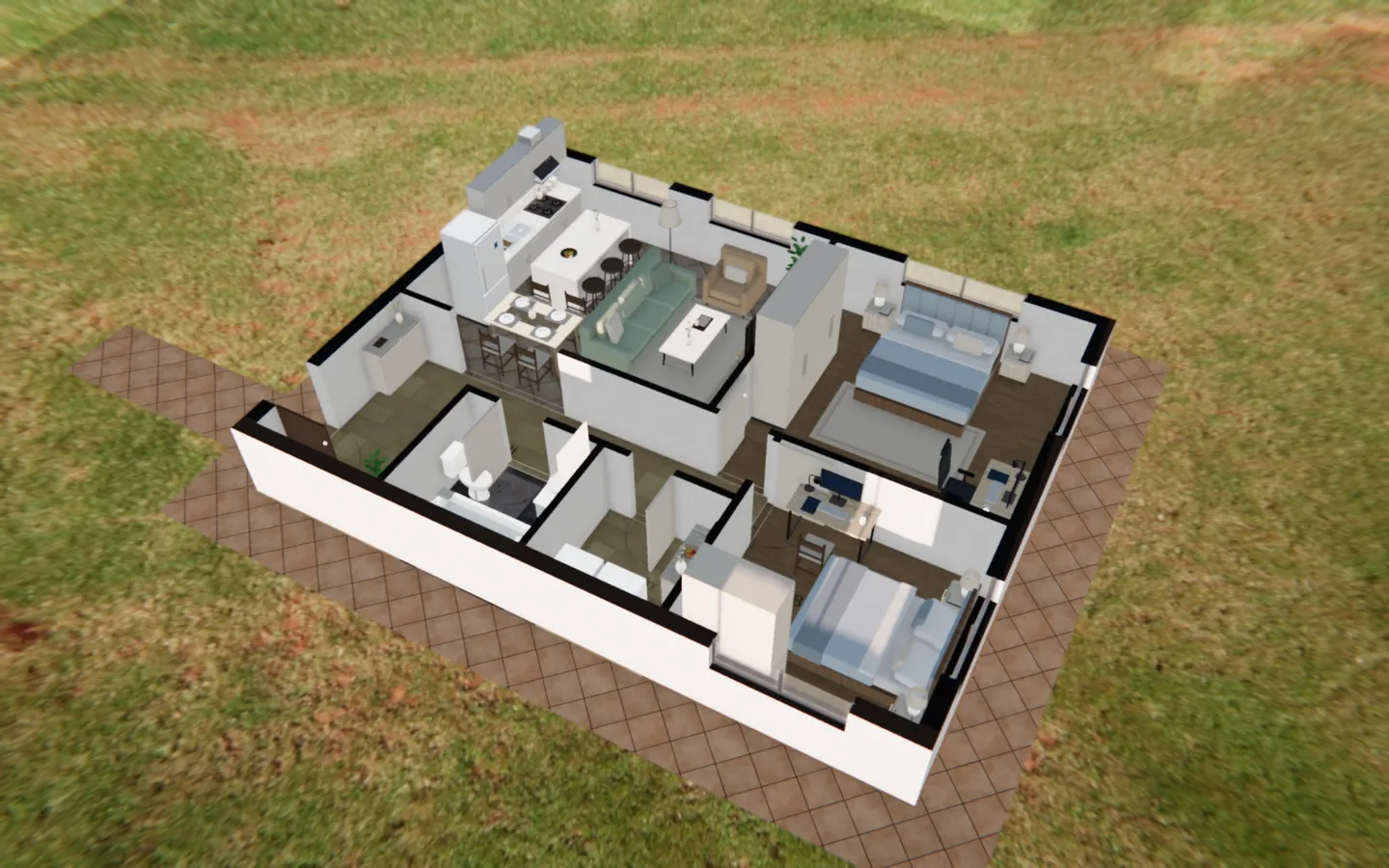
In a cold climate, direct sun in rooms used during the day may be a benefit. In a hot climate, consider whether the afternoon sun would make a room uncomfortable and whether there is shade when you need it. Near the equator, the sun can be high overhead, so roof edges, balconies and other shade can matter more than a simple north-versus-south rule.
Look outside as well as inside. A nearby building might block low winter sun but leave a window bright in summer. A tree may shade a window for part of the year. No compass direction can tell you how much of the sky is actually open from a particular window.
Compare window directions at the hours you use each room
First, get a plan with the window positions and find out which way north really points. Do not assume the top of a brochure plan is north. If the plan has no north arrow, ask for the orientation or check it at the property. Then check the light at the hours and seasons that matter to you.
Home 3D Studio can help you picture that check from a floor plan. Open a design, choose Outside, then the Sun tab. Set the place and orientation before comparing dates and hours. The Sun tool places the sun for that place and time; you can walk through the rooms and see where its light falls. The steps are also in The Sun tool.
- Open the two-bedroom apartment sample free, with no sign-up.
- Set Place in Outside > Sun to the city or coordinates so the sun's path matches that latitude.
- Set North to turn the plan until north matches reality; a compass app on your phone can show it.
- Set Date to compare December and June, since the same room can change markedly between seasons.
- Set Local time to the hours you use the room.
- Use Walk to compare the rooms at breakfast and evening, then check real shade outside.
The result is only as accurate as these settings and the plan; the tool does not know neighbouring buildings or trees.
Try it free now on the sample with every tool and no sign-up; at the time of writing, your own plan costs 20 credits, from €4.99 for 50 credits when you upload your plan.
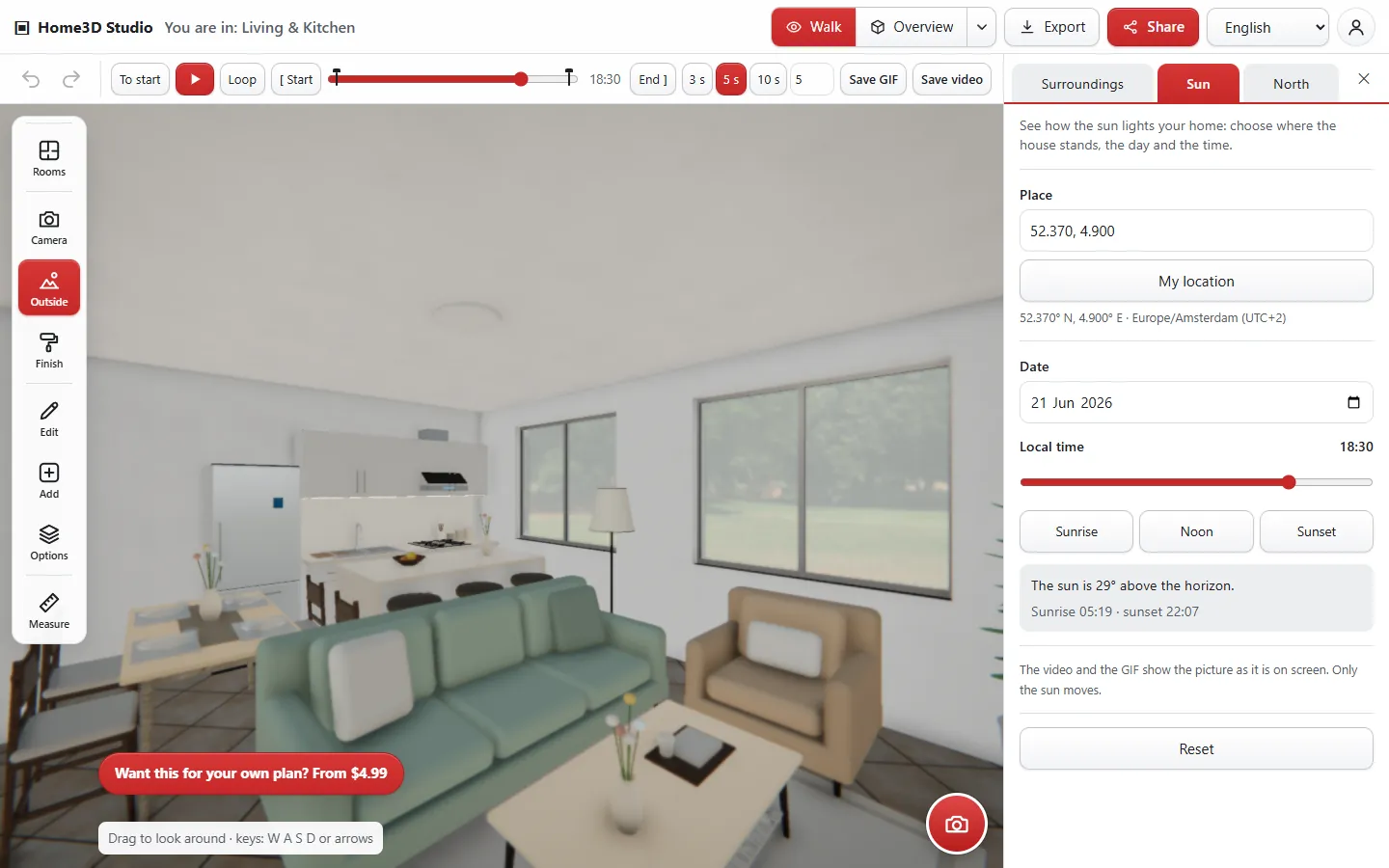
Try a winter day and a summer day. At each, look in the morning, at midday and when you would use the living room in the evening. Compare the bedroom at waking time and any work area during your working hours. For a broader guide to reading light through the day, see How sunlight will fall in your future home.
The tool knows the sun’s position, but it does not know the neighbouring buildings, hills or trees around a particular home. It does not predict cloud cover either. Check the view from each window during a visit, and treat the 3D sunlight as a way to test the plan, not a promise of what every day will look like.
Frequently asked questions
Is a south-facing house always the best for sunlight?
No. In the northern hemisphere, south-facing main windows generally receive the most direct sun, but in the southern hemisphere you look towards north instead. In a hot climate you may want shade rather than more sun, and near the equator roof edges and balconies can matter more than one compass direction.
Is a north-facing house always dark?
No. In the northern hemisphere, north-facing windows usually give steadier, indirect light with less direct sun, which can suit a room where you prefer even light. It can feel dim if other windows are shaded too. In the southern hemisphere, north-facing windows generally receive more sun.
Does the direction of the front door matter for sunlight?
No. Look at the main windows of the rooms you use, not the door. A front door may face north while the living room opens to the south, and calling that a north-facing house would hide the part that matters. If you have a floor plan, mark north and note where the largest windows are.
How do you find out which way a house faces?
Look for a north arrow on the plan, and do not assume the top of a brochure plan is north. If there is no arrow, ask for the orientation or check it at the property. A compass app on your phone can show north, which you can then match to the plan.
Does the best direction change with the season?
Yes. In winter the low sun can reach deeper into a room through a window that faces it, while the higher summer sun lights the area nearer the window. A single viewing in one season tells you little, so compare a winter day and a summer day, at the hours you use each room.
Can you check a house for sunlight before you buy?
You can test the plan. Open a free sample design and set the place, north, date and local time in the Sun tool; your own plan costs 20 credits. It does not know neighbouring buildings, hills, trees or cloud cover, so treat it as a test of the plan, not a promise of every day.
See it in 3D
Open a sample design and walk through it, check the sun, set the hour and watch the lamps come on. It is free, in your browser, with nothing to install.
Or open a sample directly: 1920s teacher's cottage · Two-bedroom apartment
Choose the direction by the windows in the rooms you care about, at the hours you use them. Check both winter and summer, then look for real-world shade outside. That gives you a more useful answer than a house’s front-door direction alone.